

Learn how integrating nurse call, CCTV, and access control improves...
اقرأ المزيدعن الشركة

تساعد شركة فيوتشر إنترست للتجارة المؤسسات والشركات على تبني التحول الرقمي من خلال حلول مبتكرة في البنية التحتية لتكنولوجيا المعلومات، والحلول السحابية، والأمن السيبراني، والشبكات، والخدمات المدارة.
التصنيفات
الأرشيف
تواصل معنا
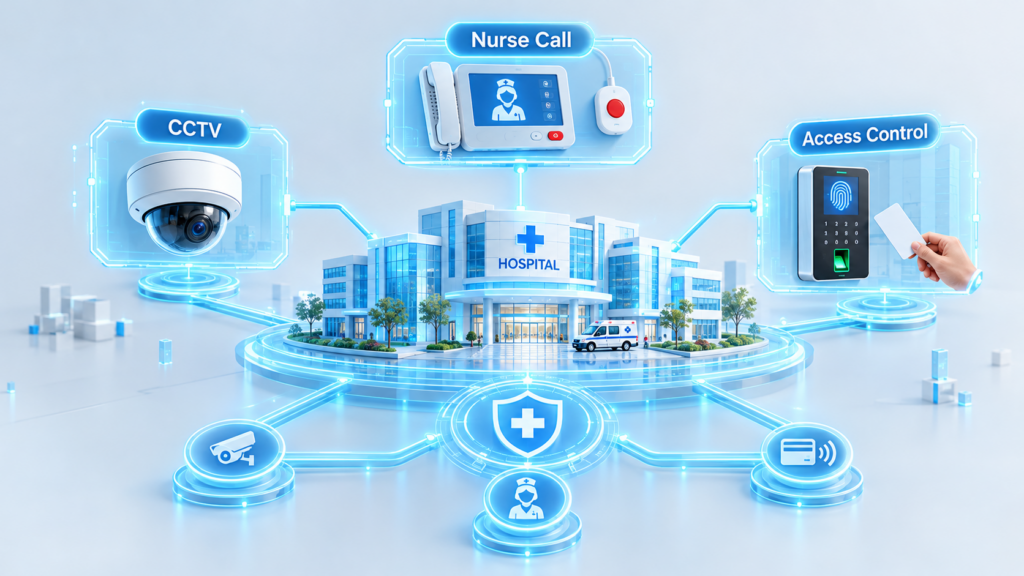
Nurse call, CCTV, and access control integration means connecting three hospital systems so they work as one coordinated platform instead of three separate ones. When a patient presses a call button, a door is forced open, or a restricted area is breached, the other systems respond automatically, giving staff faster alerts, live video context, and a single record of what happened.
For hospitals in Saudi Arabia, where healthcare capacity is expanding under Vision 2030 and patient safety and data protection expectations keep rising, integrated security and communication systems are becoming a core part of hospital design rather than an optional upgrade.
Why Hospitals Need Integrated Systems
Most hospitals already have nurse call, CCTV, and access control in some form. The problem is that they often run independently, installed at different times by different vendors. Staff then have to check several screens, call security by phone, and piece together events manually.
Integration solves this by connecting the systems so that information moves between them in seconds. The main benefits include:
- Faster response times: Alerts reach the right staff with the right context, so they know where to go and what they are walking into.
- Better patient safety: Fall risks, patients at risk of wandering, and unattended emergencies are caught sooner.
- Stronger security: Unauthorized entry into restricted zones triggers immediate alerts and video verification.
- Reduced blind spots: Events in one system are visible through the others.
- A single audit trail: Incident reviews, accreditation audits, and investigations rely on one connected record rather than scattered logs.
Understanding the Three Systems
Nurse Call Systems
A nurse call system lets patients request help and lets staff communicate with each other. Modern systems go well beyond a bedside button. They support priority levels, staff-assist and emergency (code blue) alerts, bathroom pull cords, corridor lights, and mobile notifications sent directly to nurses’ devices.
CCTV (IP Video Surveillance)
Hospital CCTV covers entrances, corridors, parking areas, emergency departments, pharmacies, and other sensitive spaces. IP cameras connected to a video management system (VMS) allow live monitoring, recorded playback, and analytics. Camera placement in healthcare must balance security with patient privacy, so patient rooms and treatment areas need careful policy decisions.
Access Control
Access control manages who can enter which area and when. Badges, PINs, and biometrics restrict access to wards, ICUs, operating theatres, pharmacies, laboratories, medical records rooms, and server rooms. Every entry and denied attempt is logged.
How Integration Works in Practice
The real value appears in the scenarios where the systems talk to each other.
- Nurse call plus CCTV: When a patient triggers an emergency call, the nearest camera feed can appear automatically at the nurse station or security desk, so staff can see the situation before they arrive.
- Access control plus CCTV: If a door is forced open, held open too long, or accessed with an invalid credential, cameras covering that door can pop up on the operator’s screen and start flagged recording.
- Access control plus nurse call: Staff-assist or duress alerts can unlock or lock doors in the affected area, allowing responders through while limiting movement elsewhere.
- Emergency lockdown and unlock: From one control point, security teams can lock down specific wards or release doors during a fire or evacuation, in line with the facility’s emergency plan.
- Patient and infant protection: Restricted-area alerts, tag-based monitoring, and door controls work together to prevent unauthorized exits and protect vulnerable patients.
Technical Foundations for a Reliable Integration
Integration only works if the underlying infrastructure is sound. Key considerations include:
- Network design: Video traffic is heavy. Use dedicated VLANs, adequate bandwidth, and quality-of-service rules so security and clinical traffic do not compete.
- Power and cabling: Power over Ethernet (PoE) simplifies camera and device deployment, and structured cabling should be planned for future expansion.
- Integration platform: Systems connect through open APIs, standard protocols, or a central management platform such as a PSIM or unified VMS. Choose equipment with proven interoperability rather than relying on custom workarounds.
- Connection to hospital systems: Where appropriate, link with the hospital information system (HIS), building management system (BMS), and fire alarm system.
- Redundancy: Backup power, failover servers, and storage redundancy keep critical functions running during outages.
Compliance, Privacy, and Cybersecurity
Healthcare facilities handle sensitive information, and networked security devices can become entry points for attackers if they are left unprotected. Plan for the following:
- Data protection: Video footage and access logs can contain personal data. Align retention periods, access rights, and storage practices with the Saudi Personal Data Protection Law (PDPL) and your organization’s policies.
- Camera placement and signage: Avoid intrusive placement in patient care areas and make sure monitoring is properly communicated.
- Device hardening: Change default credentials, update firmware, disable unused services, and segment security devices from the general network.
- Cybersecurity controls: Follow the relevant National Cybersecurity Authority (NCA) requirements for networked systems, and include security devices in regular vulnerability assessments.
- Accreditation readiness: Integrated logging and reporting support evidence needs for healthcare accreditation reviews.
Implementation Checklist
Use this list when planning a new project or upgrading an existing facility:
- Conduct a site survey and review clinical workflows with nursing, security, and facilities teams.
- Define security zones (public, restricted, high-risk) and the rules for each.
- Map the integration scenarios you want, such as which events trigger which actions.
- Design the network, cabling, and power with growth and redundancy in mind.
- Select systems for open standards and proven interoperability.
- Plan cybersecurity controls and data retention policies before deployment.
- Test every integrated scenario under realistic conditions before go-live.
- Train clinical and security staff, and document the procedures.
- Set up maintenance, monitoring, and support agreements with clear service levels.
Common Mistakes to Avoid
- Buying siloed systems: Selecting nurse call, CCTV, and access control separately without checking compatibility leads to expensive integration problems later.
- Underestimating network load: High-resolution video can overwhelm a network that was not designed for it.
- Neglecting device security: Unpatched cameras and controllers are a common weak point.
- Skipping staff training: Even the best system fails if staff do not know how to use the alerts and workflows.
- No failover plan: Hospitals cannot afford security or call systems going offline during a power or network failure.
- Ignoring future growth: New wings, departments, and technologies should be easy to add without redesigning the whole system.
How FITCO Supports Healthcare Facilities
FITCO helps healthcare organizations in Saudi Arabia plan, design, and deploy integrated IT and ELV infrastructure, from structured cabling and network design to CCTV, access control, and communication systems. Our approach starts with understanding how your clinical and security teams actually work, then building a reliable, secure, and scalable system around those needs.
If you are planning a new hospital, expanding a facility, or looking to connect existing systems, contact our team to discuss your requirements.
الأسئلة الشرائعة والمتكررة
What is a nurse call system?
A nurse call system is a communication network that lets patients request assistance and lets staff send alerts to each other. It typically includes bedside units, bathroom pull cords, corridor indicators, and mobile or nurse-station notifications, with priority levels for emergencies.
Can a nurse call system integrate with CCTV?
Yes. With a compatible integration platform or open interfaces, a nurse call event can automatically display the nearest camera feed to staff, helping them assess the situation before reaching the room.
Why is access control important in hospitals?
Access control protects patients, staff, medications, equipment, and sensitive records by limiting entry to authorized people. It also creates a log of who entered which area and when, which supports investigations and audits.
How long should hospital CCTV footage be kept in Saudi Arabia?
Retention periods depend on the facility’s policies, the type of area monitored, and applicable regulations. Confirm the current requirements with the relevant authorities and your legal and compliance teams before setting a retention policy.
How much does an integrated hospital security system cost?
Cost depends on facility size, number of cameras, doors, and call points, the level of integration, and the infrastructure already in place. A site survey and scope definition are the best way to get an accurate estimate.
Does integration increase cybersecurity risk?
It can if done poorly, since more connected devices mean a larger attack surface. With network segmentation, device hardening, regular updates, and proper access controls, integrated systems can be operated securely.
أحدث المقالات

Hospital Disaster Recovery Solutions in Saudi Arabia | Business Continuity
Disaster recovery and business continuity solutions help hospitals in Saudi...
اقرأ المزيد
Managed IT Services for Government Entities in Saudi Arabia | Benefits, Risks & Costs
Explore how managed IT services help Saudi public entities improve...
اقرأ المزيد