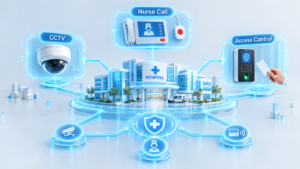
Managed IT services for hospitals in Saudi Arabia are outsourced or co-managed technology support covering network management, cloud infrastructure, cybersecurity monitoring, help desk support, and disaster recovery — helping hospitals keep clinical and administrative systems secure, available, and compliant with Saudi regulations.
What Do Managed IT Services for Hospitals Include?
Managed IT services for a hospital typically include:
- Network management — switches, routers, firewalls, Wi-Fi, segmentation
- Cloud management — infrastructure, backup, access, cost control
- Cybersecurity monitoring — threat detection, patching, incident response
- 24/7 infrastructure monitoring — servers, storage, applications, endpoints
- Backup and disaster recovery — automated backups, tested restoration
- IT help desk — user support for clinical and administrative staff
- Endpoint management — device security, updates, inventory
Why Do Saudi Hospitals Need Managed IT Services?
Hospitals run hundreds of connected devices, applications, and network segments that must stay online continuously. Saudi Arabia’s National Cybersecurity Authority (NCA) sets cybersecurity controls that healthcare organizations operating in the Kingdom must follow, making managed cybersecurity a compliance requirement, not just an operational one.
What Are the Benefits of Managed IT Services for Hospitals?
- Improved reliability — proactive monitoring reduces downtime
- Stronger cybersecurity — continuous threat detection and response
- Specialized expertise — access to network, cloud, and security professionals
- Scalability — IT support grows with the hospital
- Reduced internal workload — routine maintenance handled externally
- Business continuity — backup and disaster recovery built in
What Should a Hospital Look for in a Managed IT Provider?
Factor | What to Check |
Healthcare experience | Familiarity with hospital IT environments |
Cybersecurity | Monitoring and incident response capability |
Compliance | Alignment with NCA and Saudi regulatory requirements |
Monitoring | True 24/7 infrastructure visibility |
Disaster recovery | Backup and tested restoration |
Support | Response times and availability |
Hospitals should confirm a provider’s registration or licensing status with the NCA, particularly for cybersecurity and Managed Security Operations Center (MSOC) services.
Best Practices for Implementing Managed IT Services
- Start with an IT assessment to baseline infrastructure, applications, and security.
- Define SLAs for response times, resolution targets, and support hours.
- Prioritize critical clinical systems over administrative ones.
- Enforce strong access controls — role-based access, MFA, audit logging.
- Test disaster recovery regularly, not just on paper.
FAQ
What are managed IT services for hospitals?
Ongoing monitoring, maintenance, and support of a hospital’s IT infrastructure — network, cloud, cybersecurity, and endpoints — handled by an internal or external provider.
Are managed IT providers regulated in Saudi Arabia?
Yes. The NCA licenses certain cybersecurity providers, including Managed Security Operations Centers (MSOCs), and hospitals should verify this status before engaging a provider.
How often should disaster recovery be tested?
Regularly and on a defined schedule — testing confirms data and applications can actually be restored within required recovery timeframes, not just that backups exist.
Ready to Strengthen Your Hospital’s IT Infrastructure?
FITCO delivers managed IT services built for Saudi healthcare environments — 24/7 monitoring, NCA-aligned cybersecurity, cloud management, and disaster recovery designed around clinical priorities.
Talk to an IT Specialist →